Charting Player Habit Changes When Switching from Trial Modes to Paid Mobile Casino Play Across Leading Developers
Sage Frank · Jun 30, 2026
Charting Player Habit Changes When Switching from Trial Modes to Paid Mobile Casino Play Across Leading Developers
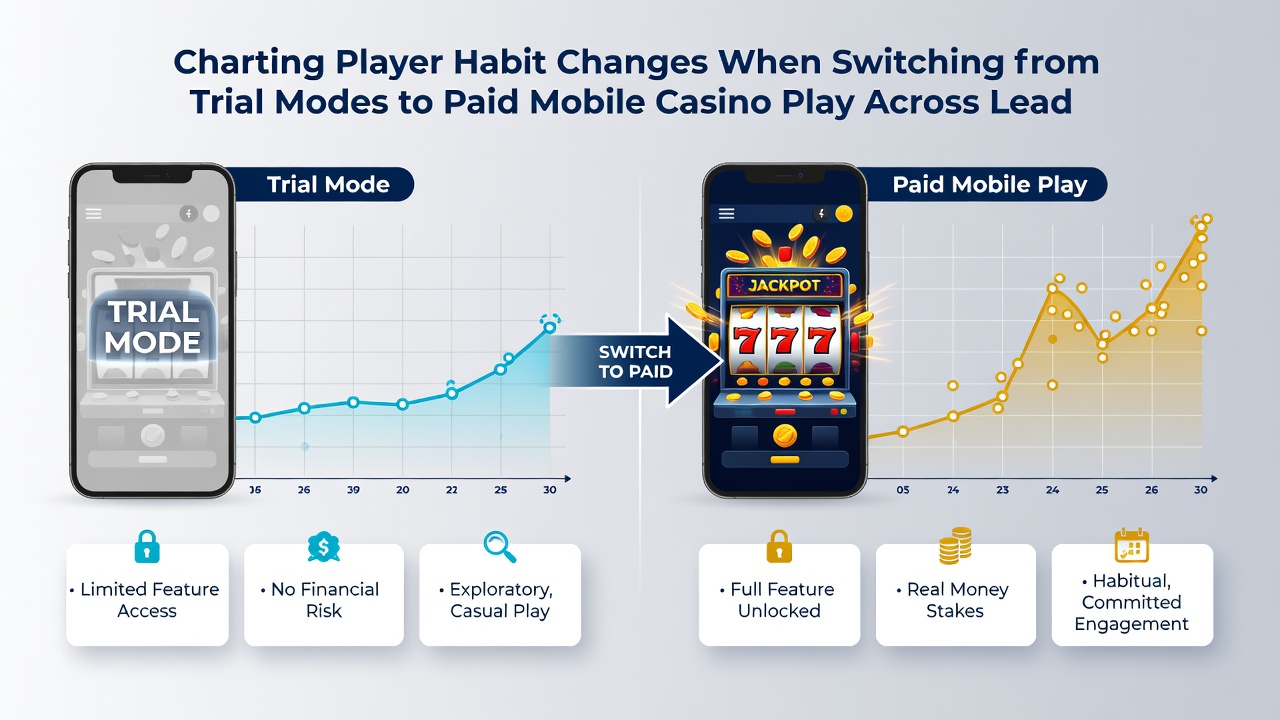
Data from multiple markets shows clear shifts in behavior once players move beyond trial versions into paid mobile sessions, and these patterns hold steady across studios such as Microgaming, Playtech, Pragmatic Play, and IGT. Session duration often lengthens while average wager sizes increase, yet the specific triggers vary by developer mechanics and regional regulations. Observers tracking these transitions note that players who begin in free modes frequently adjust their risk thresholds within the first three paid sessions, a trend documented in longitudinal player logs collected through operator partnerships.Session Length and Frequency Adjustments
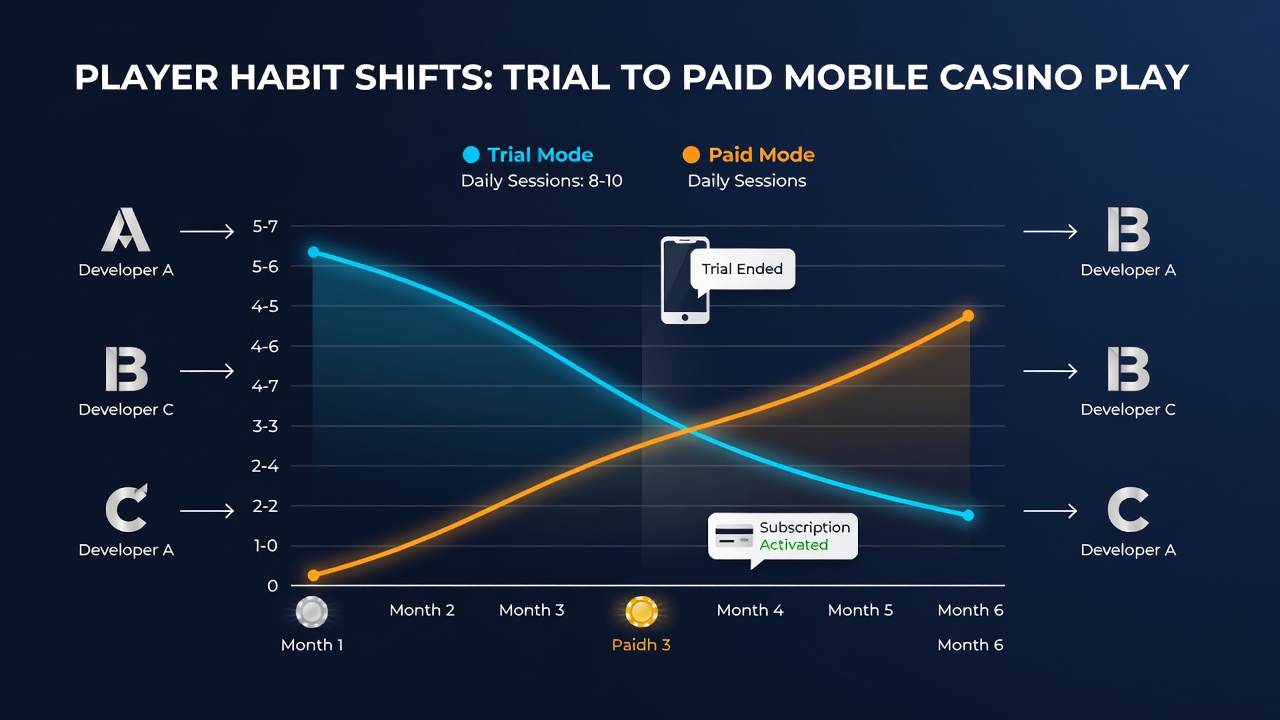
Analysts examining aggregated telemetry report that trial users who convert to paid accounts extend average playtime by 18 to 27 minutes per session once real stakes are involved, according to figures compiled by the Australian Gambling Research Centre. Frequency of logins tends to stabilize rather than spike, with many users settling into two to three sessions weekly instead of the scattered short bursts common during demo exploration. This stabilization occurs because paid environments impose natural pacing through balance management, whereas trial modes allow unlimited restarts without consequence.
Bet Sizing and Game Selection Shifts
Bet sizing habits change noticeably once currency enters the equation. Players who tested high-volatility titles in demo frequently reduce initial stake levels by 30 to 40 percent during their first paid week, then gradually scale upward as familiarity grows. Game selection also narrows, with users gravitating toward titles that delivered strong demo results rather than continuing broad experimentation. Leading developers observe this convergence through heat-map data on their own platforms, where conversion cohorts cluster around specific mechanics such as cascading reels or progressive multipliers within weeks of switching.
Regional Regulatory Influences on Conversion Patterns
Regulatory frameworks shape these habit transitions differently by jurisdiction. In markets overseen by the Malta Gaming Authority and the Nevada Gaming Control Board, conversion rates from trial to paid remain higher where operators can offer structured welcome incentives tied to verified play history. Canadian provincial data collected through the Alcohol and Gaming Commission of Ontario similarly indicates that players exposed to clear spend-limit tools during demo phases carry those controls into paid environments, resulting in steadier bankroll management over six-month periods. As of June 2026, several operators began testing unified demo-to-paid tracking dashboards that flag early signs of habit escalation, allowing proactive interface adjustments without restricting access.
Developer-Specific Design Impacts
Each studio's design philosophy influences how habits evolve after the switch. Pragmatic Play titles, for instance, encourage shorter but more frequent paid sessions due to rapid bonus round triggers, while IGT's classic reel games see longer sustained spins once real money is committed. Playtech's live dealer integrations show the steepest increase in session depth because visual and social cues absent from demo versions become available only after payment. Microgaming's progressive jackpot networks demonstrate another pattern where players who sampled the mechanics in trial mode allocate a larger percentage of their balance to linked progressives within the first month of paid activity.
Conclusion
Tracking these habit transitions provides developers and operators with measurable benchmarks for platform refinement, and the patterns remain consistent enough across regions to support predictive modeling. Continued collection of anonymized session data through 2026 and beyond will clarify whether mobile-specific interfaces accelerate or moderate the observed shifts from trial exploration to sustained paid engagement.