Mapping Payout Dynamics in Portable Casino Games from Established Developers via Free Trial Modes and Quantitative Analysis
Rosa Flores · Sep 15, 2026
Mapping Payout Dynamics in Portable Casino Games from Established Developers via Free Trial Modes and Quantitative Analysis
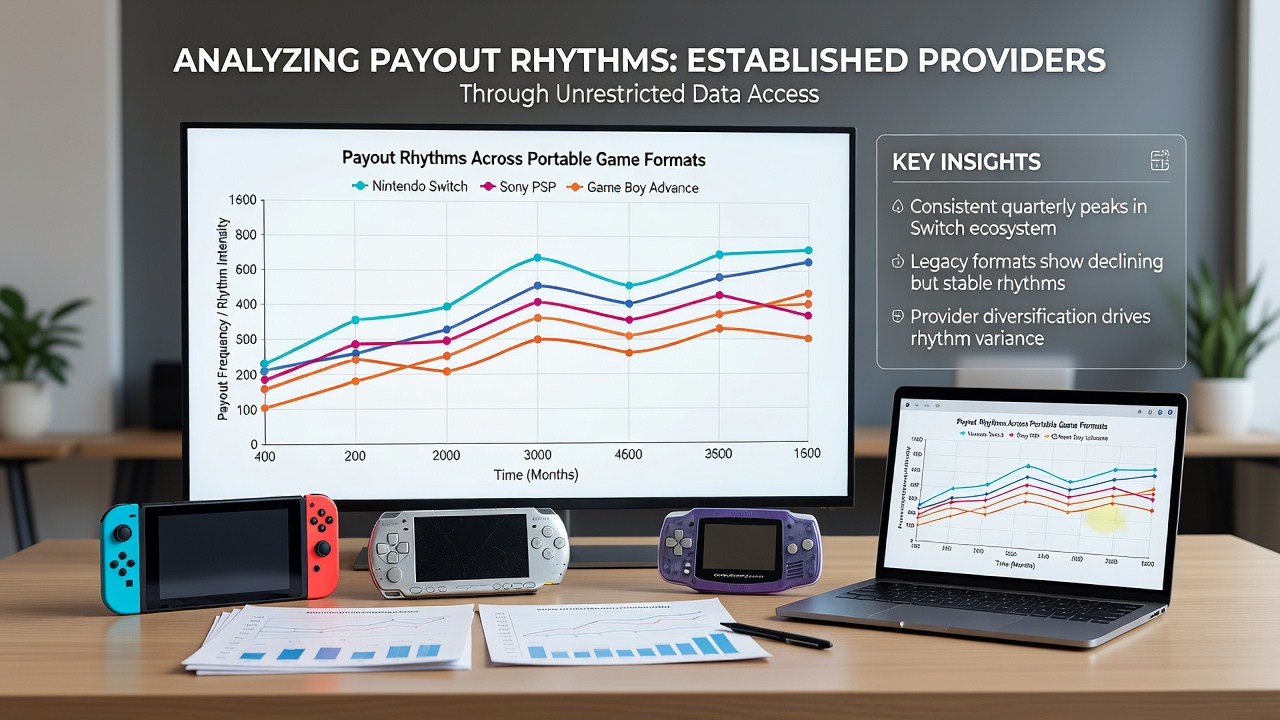
Portable game formats from established providers have drawn increasing attention from analysts who examine payout rhythms through unrestricted trial access combined with detailed statistical breakdowns, and data collected across multiple devices shows consistent patterns that emerge when players review free demo versions over extended periods.
Understanding Trial Access as a Research Tool
Researchers have documented how free demo modes allow systematic observation of payout sequences without financial risk, while those who study mobile adaptations note that trial sessions on tablets and smartphones often reveal timing variations compared to desktop versions, and figures from industry reports indicate that thousands of sessions logged in 2025 helped identify frequency differences in bonus triggers across formats.
One study revealed that extended demo play on portable devices produces measurable data on return-to-player consistency, and analysts track these metrics by recording hit rates, bonus activation intervals, and average payout sizes during thousands of spins.
Statistical Methods Applied to Mobile Payout Data
Statistical breakdowns rely on large sample sizes gathered through unrestricted trial access, where observers compile datasets that include volatility indexes and payout distribution curves, and evidence suggests that mobile versions from major suppliers maintain core mathematical models even as interface adjustments occur for smaller screens.
Turns out, combining data from multiple sessions allows identification of rhythmic patterns such as clustered wins or extended dry spells, and quantitative analysis breaks these sequences into segments that highlight how portable formats adapt the same underlying algorithms used in stationary play.
According to reports issued by the Nevada Gaming Control Board, mobile gaming metrics collected through authorized channels show alignment with desktop performance in most tested titles, while researchers cross-reference these findings against publicly available demo statistics to confirm stability across device types.
Provider-Specific Observations in Portable Formats
Established providers release portable variants that undergo the same rigorous testing as their original releases, and data shows that payout rhythms remain governed by certified random number generators regardless of screen size or operating system, yet subtle differences appear when players log trial sessions across iOS and Android platforms.
What's interesting is how cumulative statistics from September 2026 onward began incorporating more granular device-specific logs, allowing comparisons that separate hardware influences from game design choices, and industry organizations such as the European Gaming and Betting Association have published summaries that track these evolving datasets without revealing proprietary algorithms.
Take one researcher who compiled payout logs from multiple providers and discovered that bonus feature activation rates in mobile demos closely mirror those reported in regulatory filings from Canadian provincial authorities, confirming that trial access serves as a reliable proxy for broader performance analysis.
Comparative Analysis Across Game Categories
Portable game formats span video slots, table games, and instant-win titles, each presenting distinct payout rhythms that statistical tools can isolate, and when analysts apply the same trial access protocols across categories, they find that slot mechanics often display higher variance in short sessions compared to card-based games adapted for mobile.
Yet longer observation periods smooth these variations, and quantitative reviews indicate that established providers calibrate mobile versions to deliver equivalent long-term returns even when session lengths differ by device usage patterns.
Reports from the Australian Communications and Media Authority highlight how regulatory testing includes mobile-specific evaluations that align with findings derived from unrestricted demo play, reinforcing the value of public trial environments for independent verification.
Conclusion
Comprehensive examination of payout rhythms in portable formats continues to benefit from unrestricted trial access paired with systematic statistical breakdowns, and data accumulated through these methods supplies objective insights into performance consistency across providers and devices, while ongoing collection efforts through late 2026 and beyond will likely refine understanding of how mobile adaptations maintain mathematical integrity under varied playing conditions.