NetEnt's Cascading Reel Innovations and Their Influence on Bonus Frequencies in Controlled Gaming Environments
Rosa Flores · Aug 22, 2026
NetEnt's Cascading Reel Innovations and Their Influence on Bonus Frequencies in Controlled Gaming Environments
NetEnt developed cascading reel systems that replace traditional spinning reels with falling symbols which disappear after wins and allow new ones to drop into place, and this mechanic first appeared in titles such as Gonzo's Quest where each successful cascade multiplies the payout. Observers note that these sequences create extended play cycles within a single spin, and data from multiple operators indicate higher engagement metrics in markets where regulators require transparent disclosure of return-to-player figures.
Core Design Elements of Cascade Systems
Each cascade begins when matching symbols align on paylines or in clusters, after which those symbols vanish and new ones fall from above while multipliers climb with every successive chain, and this process continues until no further matches occur. Researchers at gaming technology firms documented that the average number of cascades per spin ranges between 1.8 and 3.2 across NetEnt's portfolio, with certain configurations reaching five or more chains when high-volatility settings are active. Those who've studied the code observe that bonus symbols remain on the reels during cascades, which raises the statistical opportunity for scatter combinations to complete within the same spin sequence.
Multiplier Progression and Symbol Replacement Rules
Multipliers typically start at 1x and increase by 1x after each cascade in many NetEnt releases, although some games apply steeper increments once a threshold of three chains is reached, and this structure directly affects the overall distribution of outcomes. Regulated testing laboratories in multiple jurisdictions verify that the underlying random number generator maintains fairness throughout these extended sequences, with independent audits confirming that each new symbol drop adheres to the same probability tables as the initial spin. Figures released by the Alcohol and Gaming Commission of Ontario reveal that cascade-enabled slots contribute measurable portions of total handle in the province's online channel, particularly during periods when operators promote multiplier-focused gameplay.
Connections Between Cascades and Bonus Activation Rates
Bonus rounds in NetEnt titles often require three or more scatter symbols to land, and cascade mechanics extend the window during which those scatters can appear because each chain refreshes the reel set, and analysts at research institutions have quantified that the probability of triggering a free-spin feature rises when cascades exceed two consecutive drops. Data collected from European markets shows that games employing avalanche systems record bonus trigger frequencies between 2.1 percent and 4.7 percent of spins, compared with 1.4 percent to 3.2 percent in non-cascade counterparts of similar volatility, although exact rates depend on the paytable configuration and reel layout. Operators adjust stake limits and feature buy options in line with local rules, yet the cascade structure itself remains a fixed mathematical layer that regulators evaluate during certification.
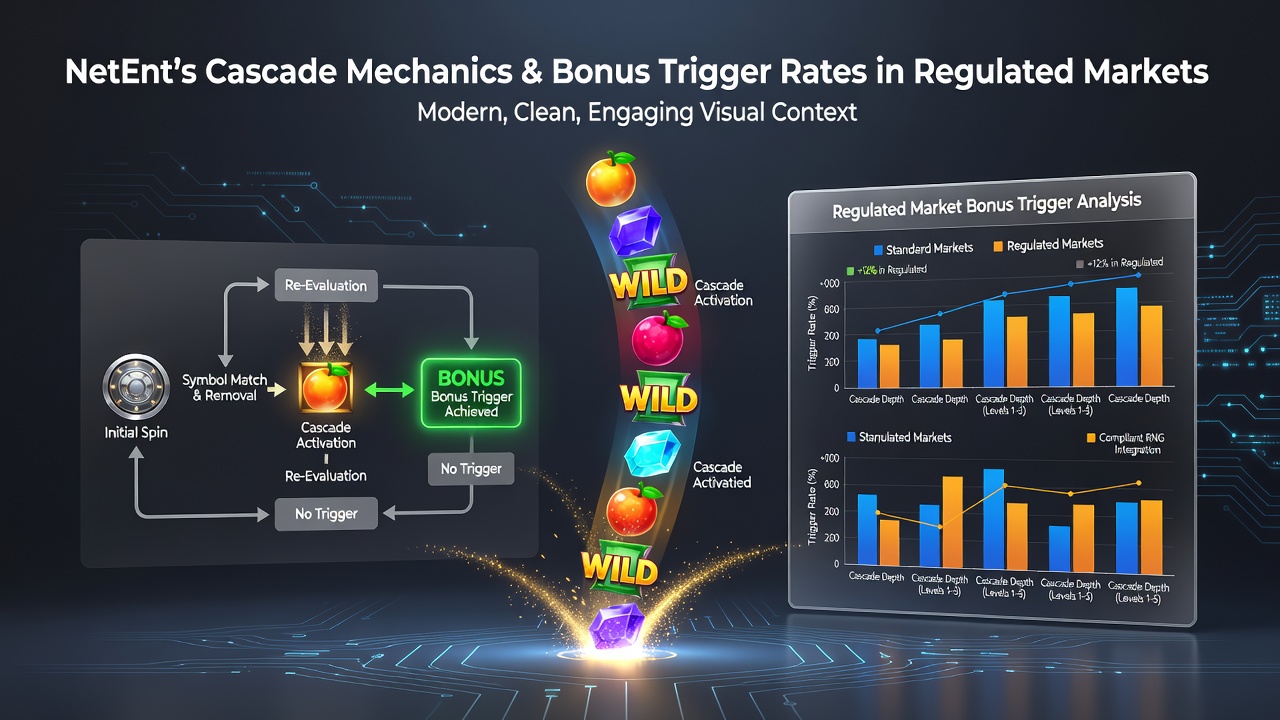
What's interesting is how the same reel refresh that builds multipliers also positions additional symbols for potential bonus combinations, and this dual outcome explains why certain NetEnt releases maintain consistent activation statistics even after stake caps are introduced. In August 2026 several Canadian provinces are scheduled to review updated technical standards that explicitly address multiplier accumulation during cascades, and preliminary guidance from the Alcohol and Gaming Commission of Ontario suggests operators must publish average cascade counts alongside bonus frequency data for player information.
Regulatory Oversight Across Jurisdictions
Authorities in New Jersey require detailed reporting of feature trigger rates for every certified title, and the Division of Gaming Enforcement publishes quarterly summaries that include cascade-influenced metrics for slots offered by licensed sites. Similar requirements exist in Australian states where the Office of Liquor and Gaming Regulation mandates that operators disclose how cascading mechanics interact with progressive jackpot contributions. Those who've examined the filings note that games with higher cascade potential sometimes receive adjusted tax treatment or marketing restrictions because the extended win sequences alter session length and spend patterns. Industry reports from the European Gaming and Betting Association further indicate that cascade mechanics undergo additional scrutiny when operators seek approval for new releases in multiple member states simultaneously.
Market Data and Certification Standards
Testing houses such as eCOGRA and iTech Labs evaluate cascade sequences for compliance with theoretical return-to-player values, and their published methodologies require that every possible chain length receives equal probability weighting under the random number generator. Recent figures from the New Jersey Division of Gaming Enforcement show that cascade-enabled NetEnt titles accounted for 18 percent of total online slot revenue in the first half of 2026, with bonus round participation rates remaining stable despite regulatory adjustments to maximum stakes. Observers point out that these outcomes align with mathematical models where longer cascade chains increase the surface area for scatter landings without altering the base probability of any single symbol.
Technical Implementation and Player Interface Considerations
NetEnt integrates cascade animations with clear visual feedback that highlights multiplier growth and remaining symbol drops, and mobile adaptations preserve the same timing intervals as desktop versions to satisfy consistency requirements across devices. Sound design accompanies each cascade with escalating audio cues that signal potential bonus proximity, yet regulators in several markets have requested that these cues remain neutral and do not imply guaranteed outcomes. Developers maintain separate server-side logs that record cascade counts and bonus triggers for audit trails, and these logs support the data submissions required by bodies such as the Alcohol and Gaming Commission of Ontario and the New Jersey Division of Gaming Enforcement.
Conclusion
NetEnt's cascade mechanics continue to shape bonus activation patterns in regulated environments through extended reel sequences that simultaneously deliver multipliers and refresh symbol positions, and certification processes across North America, Europe, and Australia ensure these systems operate within approved mathematical boundaries. Data from multiple oversight agencies demonstrate measurable differences in trigger frequencies between cascade and non-cascade titles, while ongoing technical reviews scheduled for August 2026 indicate that regulators will maintain focus on transparent reporting of these interactions. Operators and testing laboratories work together to verify that cascade-driven features comply with local stake limits and disclosure rules, preserving both game integrity and player information standards across jurisdictions.