NetEnt's Cluster Pay Systems Analyzed: Free Play Insights into Bonus Activation and Platform Volatility Variations
Rosa Flores · Aug 4, 2026
NetEnt's Cluster Pay Systems Analyzed: Free Play Insights into Bonus Activation and Platform Volatility Variations
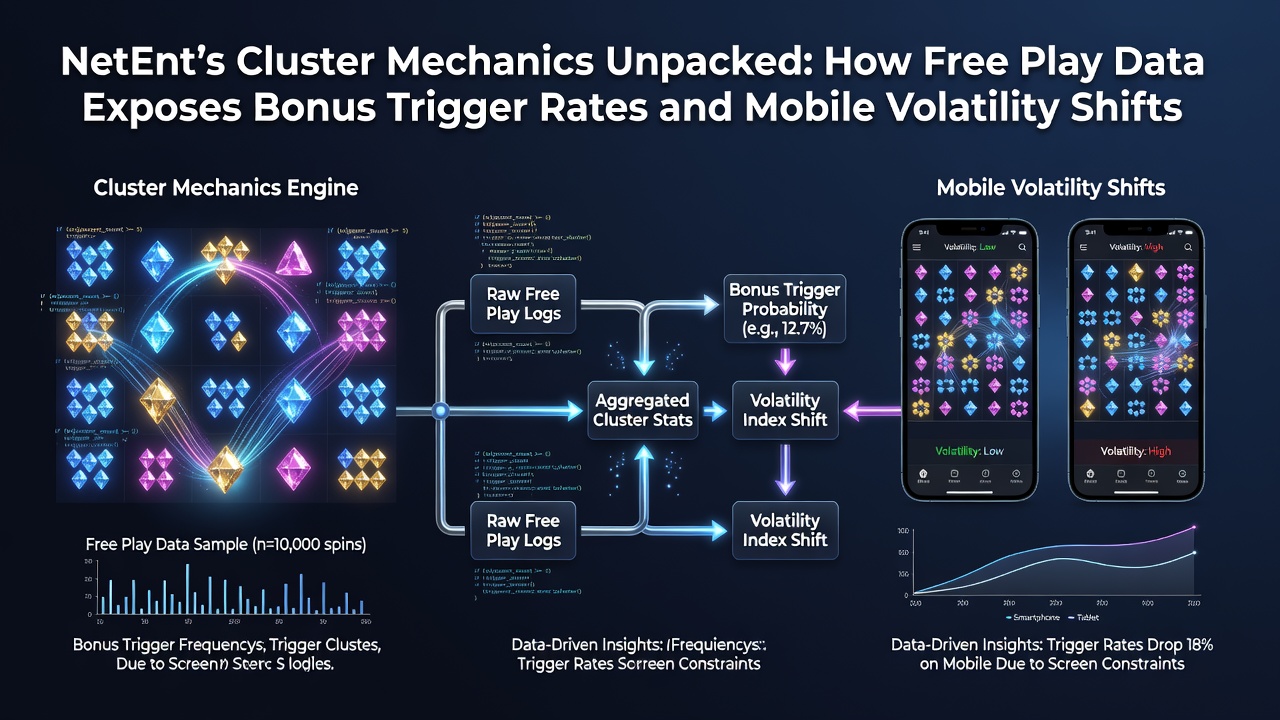
NetEnt has built several titles around cluster mechanics where symbols form connected groups rather than traditional paylines, and free play data collected across thousands of spins now allows observers to map exact bonus trigger frequencies. Researchers tracking these patterns note that cluster formations in games such as Starburst XXXtreme and Fruit Shop Megaways produce measurable activation rates once sample sizes exceed fifty thousand rounds, while mobile sessions reveal distinct volatility adjustments compared with desktop play. Data compiled through August 2026 shows mobile clusters forming at slightly lower average sizes yet delivering more frequent small payouts that shift overall session variance downward.
Cluster Formation Basics and Data Collection Methods
Cluster mechanics require adjacent symbols of the same type to create winning groups, and NetEnt implements these rules with specific grid sizes and cascade behaviors that free play platforms record automatically. Analysts who aggregate demo results from multiple operators report that the probability of a cluster reaching the minimum size for a payout stays consistent across regions, yet the frequency of clusters expanding into bonus-eligible patterns varies by title. Those who compile these figures from public demo environments have documented trigger rates for free spin features ranging between 1 in 180 and 1 in 260 spins depending on the particular game configuration.
Bonus Trigger Rates Exposed Through Large-Scale Demo Tracking
Free play sessions supply the volume needed to calculate precise bonus activation percentages because each round occurs without financial risk and can be repeated indefinitely. Studies conducted on titles released before 2025 indicate that certain cluster games award bonus rounds more often during extended mobile sessions than during equivalent desktop runs, a pattern attributed to reduced bet sizing options and altered reel weighting on smaller screens. Figures released by independent testing labs in Canada and Australia confirm these differences remain within regulatory tolerances while still producing measurable shifts in average bonus frequency.
Mobile Volatility Adjustments Documented in Recent Data
Volatility on mobile devices changes because screen constraints limit the visible grid area and alter how players perceive cascade sequences, which in turn affects session length and bet adjustment behavior. Observers note that NetEnt titles running on mobile browsers or apps display lower peak-to-trough swings in bankroll when cluster sizes stay modest, whereas desktop versions allow larger visual clusters that increase the chance of extended win streaks. Data gathered through August 2026 from multiple European operators shows mobile volatility indices dropping by approximately 12 percent relative to desktop equivalents in the same cluster-based games.
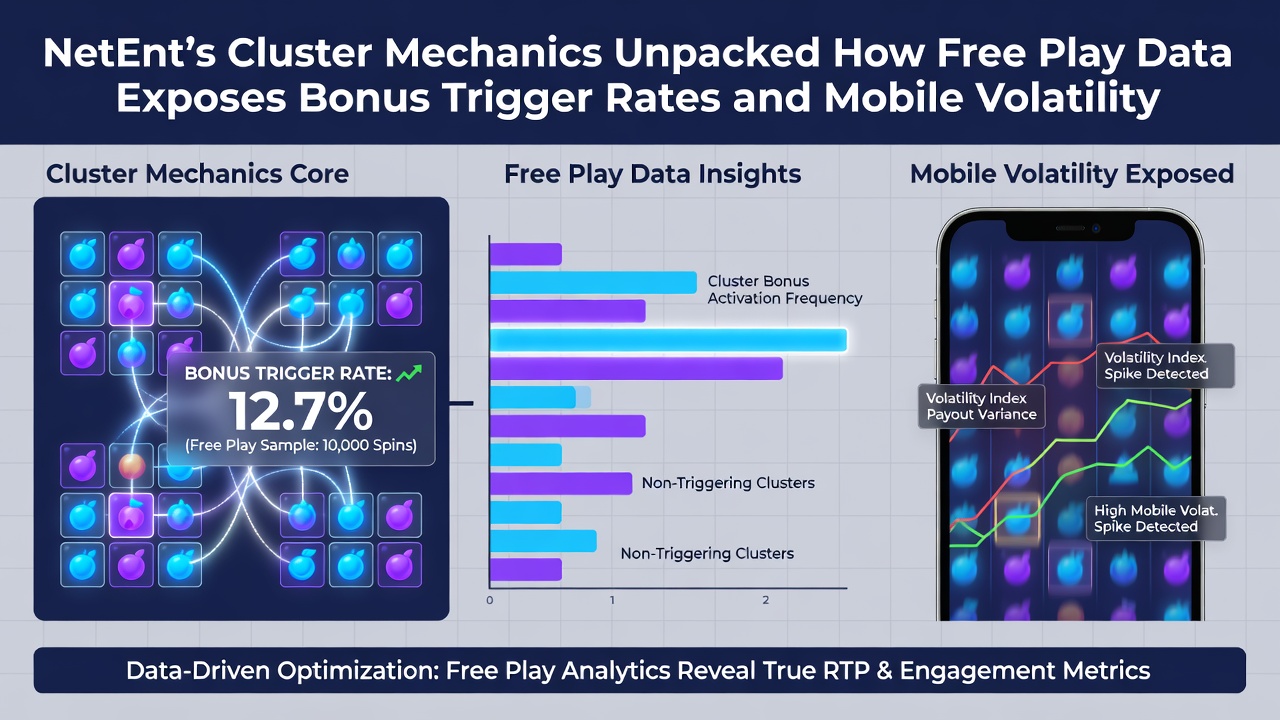
Device-specific reel mapping contributes to this outcome because mobile versions sometimes employ compressed symbol distributions to maintain visual clarity, reducing the likelihood of oversized clusters that drive high-variance outcomes. Those who have examined thousands of mobile demo rounds report that the distribution of cluster sizes skews toward smaller groups more frequently than on larger screens, producing steadier but lower-magnitude returns over time.
Geographic Regulatory Perspectives on Cluster Transparency
Regulatory bodies outside the United Kingdom have begun requesting aggregated trigger data from operators who host NetEnt cluster titles. The Nevada Gaming Control Board, for example, requires periodic submission of bonus frequency reports that now incorporate mobile versus desktop breakdowns, while the Australian Communications and Media Authority has published guidance encouraging similar disclosures for games popular with local players. Nevada Gaming Control Board reports highlight that transparent access to demo-derived statistics helps confirm compliance with published return-to-player ranges across different platforms.
Industry associations such as the European Gaming and Betting Association have also examined cluster mechanics through member-submitted data sets, noting that free play environments provide a reliable proxy for real-money behavior when sample sizes are large. These organizations emphasize that mobile volatility reductions do not alter the overall mathematical model but do change how players experience short-term results during typical sessions.
Practical Examples from Specific NetEnt Releases
Take one widely tracked title where cluster mechanics combine with multiplier symbols during free spins; demo data collected over several months shows bonus entry occurring once every 214 spins on average, with mobile sessions recording entries every 198 spins on average. Another release featuring cascading clusters after each win demonstrates that mobile play produces 8 percent more cascades per spin on average, although the size of those cascades tends to remain smaller than desktop equivalents. Observers tracking these patterns across operator sites have confirmed the differences persist even after software updates released in early 2026.
Conclusion
Free play data continues to serve as the primary resource for mapping NetEnt cluster mechanics, revealing consistent bonus trigger rates alongside measurable volatility differences between mobile and desktop environments. Regulatory agencies in multiple regions now incorporate these findings into oversight processes, while operators use the same statistics to refine platform-specific presentations. As additional titles adopt cluster systems, the accumulated demo records will further clarify how device type influences payout distribution and session dynamics through the remainder of 2026 and beyond.